The Legal Side of Costa Rica
Featuring Articles Written by Oscar Hernandez, Attorney
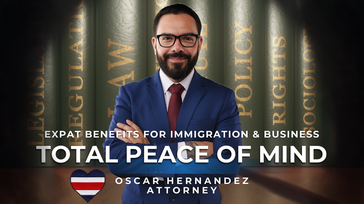
Oscar Hernandez is an Immigration Attorney
Located in San Jose, Costa Rica. He & His Team at
Expat Legal Advisors understand the needs
of the Expat who has begun a NEW LIFE in Costa Rica.
They know that the best way to enjoy the Pura Vida Lifestyle is to
have complete knowledge of the Laws of the Land. .
Understanding the Law & Living the Dream. .
Living the Pura Vida lifestyle in Costa Rica means more than enjoying its beaches, jungles and peaceful rhythm.
It means embracing a new way of life built on respect, knowledge and connection.
At Expat Legal Advisors, we believe that the more you understand the laws of the land,
the more fully and confidently you can enjoy the beauty of your new home.
These insightful articles, written by Attorney Oscar Hernández, who practices law in San José,
are designed to guide you through the legal landscape of Costa Rica with clarity and purpose.
From legal residency & real estate to healthcare & daily living, Oscar’s experience and dedication help demystify complex legal topics, empowering expats to make informed decisions
and live freely within the framework of Costa Rican law.
Knowledge is Peace of Mind. . and Peace of Mind is Pura Vida. .
Here, you’ll find practical wisdom, trusted guidance and the tools to help you thrive
as a well-informed member of Costa Rica’s expat community.

Enjoy this Article
Written Especially
for You. .
How to Buy Property Safely in Costa Rica:
A Checklist for Expats. .
Buying property in Costa Rica can be one of the most exciting decisions you ever make—whether you’re dreaming of a cozy beach bungalow or a peaceful mountain hideaway. But because the legal system works differently here, it’s important to approach your purchase with solid information and careful steps. First, always hire a qualified real estate attorney before making an offer. In Costa Rica, only a Notary Public (a specially credentialed attorney) can legally transfer property, and a good lawyer will handle the due diligence from the very beginning. One of the most important tasks is verifying the title at the National Registry. Every property has a unique “folio real” number, and your attorney will check the registered owner, property size, boundaries, liens, mortgages, disputes, and any red flags from past transactions. In some cases, people discover last-minute surprises—like liens from unpaid debts or sellers who aren’t actually the legal owners—which is why checking early is crucial.
Costa Rica also uses a cadastral system, so your attorney will verify the plano catastrado, the official survey map of the property. It’s smart to hire a licensed surveyor to walk the boundaries and make sure the map matches the land on the ground. Discrepancies, encroachments, or outdated surveys are common, especially in rural areas, and should be resolved before you move forward. Next, confirm the essentials such as water, electricity, and legal access roads. A property without a legal water source cannot receive building permits, so you should request a water availability letter, check for electrical service, and confirm that the access road is public or recorded with a proper easement. Don’t rely on informal promises like “you can get water from the neighbor” unless a legal agreement is in place.
Zoning rules matter, too. You’ll want to ensure the land can legally be used as you intend, whether that’s building a home, starting a business, or developing something larger. Municipalities can provide a uso de suelo (land-use document) outlining what’s allowed. Be especially mindful of protected areas, river setbacks, or any land within the Maritime Zone, which follows a completely different set of regulations. When it comes to paying for the property, always use a secure and transparent method. A formal purchase contract should be prepared by your attorney, and using a registered escrow service to hold your funds is the safest option. This ensures money is released only when all legal conditions are met. Direct payments to sellers—especially before closing—have led to serious problems for unsuspecting buyers.
It’s also wise to be cautious with deals that sound “too good to be true.” Offers involving untitled land, beachfront properties supposedly “fully titled,” or sellers encouraging you to avoid using an attorney should raise immediate red flags. Likewise, don’t agree to undervalue the property on the deed or pay large sums in cash—both can create legal and financial headaches down the line. Once everything is verified and cleared, you can proceed to closing. Your Notary/Attorney will prepare the transfer deed, register it, and provide proof that the property is officially under your name or your corporation’s name. After that, remember your responsibilities: paying annual property taxes, corporate obligations if applicable, and maintaining the property—especially in rural areas, where abandoned land can attract unwanted issues.
At the end of the day, buying real estate in Costa Rica is absolutely safe and straightforward when you follow the right steps. Thousands of expats have successfully done it, and the system is designed to protect you—as long as you do your due diligence. With a trusted attorney, verified title, confirmed utilities, accurate surveys, and secure payment methods, you can enjoy your new slice of paradise with confidence and peace of mind.
Lic. Oscar Andrés López Hernández
Attorney-at-Law
Expat Legal Advisors
When You're in Need of Legal Advice in Costa Rica,
Contact
Oscar Hernandez at
WhatsApp:
506-8543-7650
Email:
legal@expatlegaladvisors.com
Website:


Click on the Image Above
to Visit Our Website
Read More Legal Articles Here
 | ||||